DOCUMENTARY
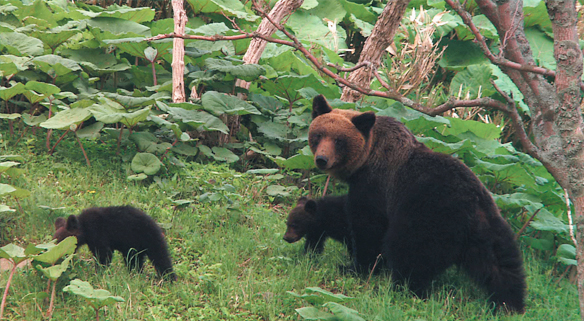
Shiretoko Peninsula’s Kingdom of Brown Bears
DOCUMENTARY
2003
30 mins Episode(s): 1
 English
English
English

English
English
“Era of Local” TV Festival 2010 Grand Prize.
Shiretoko Peninsula, Japan’s final frontier, is the last kingdom of brown bears where their life in the wild can be observed.
Surrounded by the ocean, the Shiretoko Peninsula is densely inhabited by brown bears, which is proof that Shiretoko is blessed with abundant nature that can support the lives of various creatures. The program introduces the little known life of brown bears: the growth of brown bear cubs just out of hibernation, and their trout hunting in autumn.
Shiretoko Peninsula, Japan’s final frontier, is the last kingdom of brown bears where their life in the wild can be observed.
Surrounded by the ocean, the Shiretoko Peninsula is densely inhabited by brown bears, which is proof that Shiretoko is blessed with abundant nature that can support the lives of various creatures. The program introduces the little known life of brown bears: the growth of brown bear cubs just out of hibernation, and their trout hunting in autumn.
Customers who watch this video also watch
-
A young girl Wisteria dance- Arakawa ward, Tokyo
2018 30 mins[Beauty of Japan Season 2] "Wisteria Maiden" is one of the most popular dance pieces in traditional Japanese dance (nihon buyo). Performing on the stage is 8 year-old Nona, who has a French father and a Japanese mother. She takes lessons at the Fujikawa style dance school headquarters in Minami...more details -

Trap Master Kunio Katagiri and His Secrets to the Finest Gibier
2018 Kunio Katagiri is a master trapper and has been the legendary owner-chef of a gibier (wild game) restaurant for 45 years. Katagiri, who hunts all of his game meats by himself, never uses a gun. Instead, he uses homemade traps of his own design to capture wild deer and wild...more details -
The Swordsmith -Kunimasa Matsuba to the new frontier-
2015 30 mins[Craft Masters of Japan] Kunimasa Matsuba is a Japanese swordsmith who has received the prestigious excellence award ten times at the exhibition of newly made swords in Japan. His strong, muscular body has undergone years of training in the smothering heat which enables him to create beautiful swords that gleam...more details -
Zuigan-ji (2016)
2016 48 minutesMajestic Zuigan-ji Temple in northeast Japan is a national cultural treasure. Completed 400 years ago by the feudal lord of the region, Date Masamune, it’s famous as a lavish and glorious example of the culture of the Azuchi-Momoyama period (mid-1500s to 1600). The main hall is decorated with beautiful period-style...more details