TRAVEL
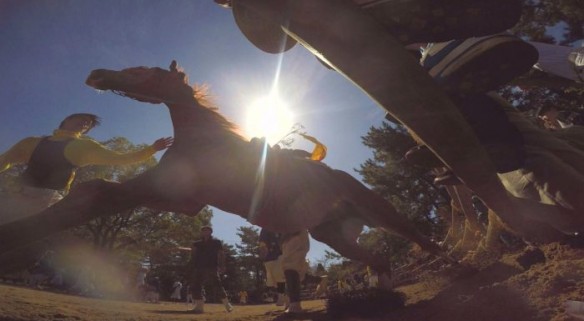
Omanto Festival -Land on This Horse-
TRAVEL
2018
30 mins Episode(s): 1
english
Japanese


[Festivals of Japan Season 2]
The Omanto Festival of Aichi Prefecture is a much-loved festival passed down since the Edo period. The highlight of this festival is held at a circular run where young men display their courage by jumping onto horses traveling at 40 km/hour. The locals of this region call this "Uma ni tomaru", which means to grab onto a horse. We will follow the stories of two youths who dedicate their lives to this tradition while introducing what fuels the young men to participate in this dangerous festival.
A tug-of-war festival?!
Click here to preview the program!
Part of "Festivals of Japan- Season 2"!
The Omanto Festival of Aichi Prefecture is a much-loved festival passed down since the Edo period. The highlight of this festival is held at a circular run where young men display their courage by jumping onto horses traveling at 40 km/hour. The locals of this region call this "Uma ni tomaru", which means to grab onto a horse. We will follow the stories of two youths who dedicate their lives to this tradition while introducing what fuels the young men to participate in this dangerous festival.
A tug-of-war festival?!
Click here to preview the program!
Part of "Festivals of Japan- Season 2"!
Customers who watch this video also watch
-
Hikiyama Children's Kabuki -Cultured Entertainment for Common Folk-
2017 30 mins[Festivals of Japan Season 1] The Hikiyama Children's Kabuki in Komatsu City, Ishikawa Prefecture, has a history of over 250 years. However, with the recent decline in birthrates and an increasing aging population, its survival has been put under threat. Amidst this problem, the children of Komatsu City try their...more details -

Grandma Takes the Mic
2024 30 minutesOkihara Tatsuyo is a budding comedian who entered the world of stand-up at the age of 71. We follow 'Grandma, who is spending her golden years pursuing her dream, and discover her passion for lífe. Click here to preview the program!more details -
Our Lives as Immigrants- Iiyama, Nagano Prefecture
2019 30 mins[Beauty of Japan Season 2] An American and English couple have lived in Iiyama City for 3 years. They earn their living through teaching English at schools within the vicinity, but wish to become farmers instead. Their excitement expands as they map out their future lives growing safe and healthy...more details -
The Swordsmith -Kunimasa Matsuba to the new frontier-
2015 30 mins[Craft Masters of Japan] Kunimasa Matsuba is a Japanese swordsmith who has received the prestigious excellence award ten times at the exhibition of newly made swords in Japan. His strong, muscular body has undergone years of training in the smothering heat which enables him to create beautiful swords that gleam...more details