FOOD
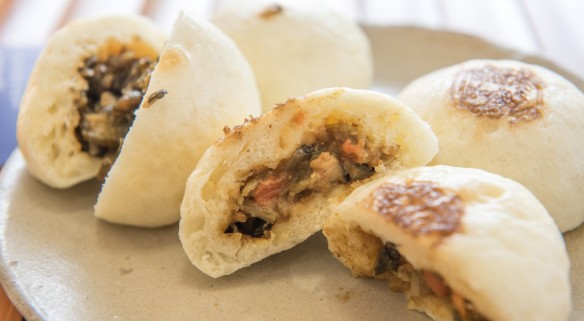
'Oyaki', Long-life Village's Savory Cake
Suzaka city, Nagano Pref.
FOOD
2016
25 minutes Episode(s): 1
english
Japanese


[Food of Japan Season 2]
Oyaki is a steamed or grilled savory cake made of cooked vegetables stuffed in a flour dough. It can also be made with An (sweet bean curd) wrapped in flour dough. This is a traditional home cuisine in Nagano prefecture. There are many Oyaki manufacturers in the region. Among many variations of stuffing, the most popular one is the 'Marunasu', a local aubergine. The camera follows this regional food culture and the people who make their living in the area.
Click here to preview this episode!
Part of the "Food of Japan Series 2"!
Oyaki is a steamed or grilled savory cake made of cooked vegetables stuffed in a flour dough. It can also be made with An (sweet bean curd) wrapped in flour dough. This is a traditional home cuisine in Nagano prefecture. There are many Oyaki manufacturers in the region. Among many variations of stuffing, the most popular one is the 'Marunasu', a local aubergine. The camera follows this regional food culture and the people who make their living in the area.
Click here to preview this episode!
Part of the "Food of Japan Series 2"!
Customers who watch this video also watch
-
Toriou Festival -Fierce and Fiery Festival Fight-
2018 30 mins[Festivals of Japan Season 2] The "Toriou Festival" of Imari City, Saga Prefecture dates back to the mid-to-late 14th century. It is said to have originated from the defeat of warrior Kikuchi Takeshige against Ashikaga. Fleeing to the Ozato Region, Takeshige trained to withstand fire, originating this fiery and dangerous...more details -

Grandma Takes the Mic
2024 30 minutesOkihara Tatsuyo is a budding comedian who entered the world of stand-up at the age of 71. We follow 'Grandma, who is spending her golden years pursuing her dream, and discover her passion for lífe. Click here to preview the program!more details -

Valens's Return Home - A Rwandan Genocide Offender, 22 Years On
2017 49minIn 1994, the conflict between the Tutsi and Hutu lead to the Rwandan genocide where more than 800,000 people were killed. Now in Rwanda, a country with no capital punishment, offenders that were involved in the genocide have been released one after another after their sentences. Can they coexist with...more details -
The Reason I Work Here- Shinagawa, Tokyo
2018 30 mins[Beauty of Japan Season 2] Yugo Matsumoto is an Englishman who owns a popular café in Shinagawa, Tokyo, where customers of all age groups stop by to spend their time. What are the reasons behind the café’s popularity? In this episode, we observe Japan through the eyes of an Englishman...more details