TRAVEL
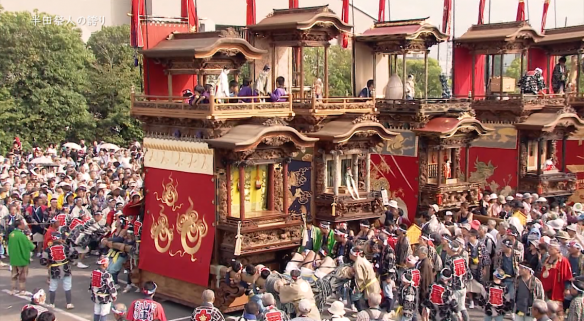
Handa Floats Festival -The Pride of the People-
TRAVEL
2017
30 mins Episode(s): 1
english
Japanese


[Festivals of Japan Season 1]
In the spring festival of Handa City, Aichi Prefecture, a total of 31 floats are pulled through 10 districts. Once every five years, the Handa Floats Festival sees the gathering of all 31 floats in one place, vastly entertaining its large crowd of onlookers. Following the people preparing for the 2017 fall festival, take a look at the float culture passed down through generations, and the people who devote their time and effort to preserving this tradition.
Click here to preview the program!
Part of "Festivals of Japan - Season 1".
In the spring festival of Handa City, Aichi Prefecture, a total of 31 floats are pulled through 10 districts. Once every five years, the Handa Floats Festival sees the gathering of all 31 floats in one place, vastly entertaining its large crowd of onlookers. Following the people preparing for the 2017 fall festival, take a look at the float culture passed down through generations, and the people who devote their time and effort to preserving this tradition.
Click here to preview the program!
Part of "Festivals of Japan - Season 1".
Customers who watch this video also watch
-

Love Stories from Fukuoka
2011 50 min Love Stories from Fukuoka is a yearly TV drama that is aired around St. Valentine's Day. Viewers from Fukuoka city, the capital of Japan's southern island of Kyushu, send in stories of their own experiences with love, loss, and longing. The program features many actors, celebrities, and athletes who...more details -
Daisen Miyuki -Ancient Dynasty Picture Scroll Revived at Mt. Daisen-
2017 30 mins[Festivals of Japan Season 1] Every three years, a festival is held at Daisen-ji, a temple devoted to worshipping Mount Daisen. Participants walk about 500 meters in a procession dressed in costumes of old and pray for good fortune. Set amidst the wonderful scenery of the magnificent Mount Daisen, this...more details -
The Real Last Samurai: Katori Shinto-ryu
2019 30 mins[Beauty of Japan Season 2] The "Tenshin Shoden Katori Shinto-ryu" is the oldest martial arts style that exists in Japan. Not only is it extremely popular within Japan, but it also has 30 branches across the globe. In Narita City in Chiba Prefecture, there is a dojo (training hall) where...more details -

Just an Ordinary Family: 22 years of a married couple with disabilities
 2014 ABU Prizes 2015 TV Winner for Documentary Coverage that follows a severely disabled married couple from their marriage, giving birth, and raising their children, for 22 years. Both Mr. and Mrs. Akimoto have cerebral palsy. They got married in 1992 as they sought independence from their parents. Before long, the...more details