TRAVEL
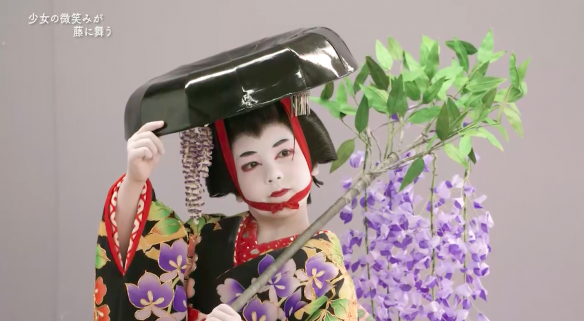
A young girl Wisteria dance- Arakawa ward, Tokyo
TRAVEL
2018
30 mins Episode(s): 1
none: None
Japanese

[Beauty of Japan Season 2]
"Wisteria Maiden" is one of the most popular dance pieces in traditional Japanese dance (nihon buyo). Performing on the stage is 8 year-old Nona, who has a French father and a Japanese mother. She takes lessons at the Fujikawa style dance school headquarters in Minami Senju, Arakawa ward in Tokyo. Her mother is a much experienced dancer at the same school, and has high hopes for Nona. This documentary follows Nona and her loving family, and the beauty of traditional dance.
Part of "Beauty of Japan- Season 2"!
"Wisteria Maiden" is one of the most popular dance pieces in traditional Japanese dance (nihon buyo). Performing on the stage is 8 year-old Nona, who has a French father and a Japanese mother. She takes lessons at the Fujikawa style dance school headquarters in Minami Senju, Arakawa ward in Tokyo. Her mother is a much experienced dancer at the same school, and has high hopes for Nona. This documentary follows Nona and her loving family, and the beauty of traditional dance.
Part of "Beauty of Japan- Season 2"!
Customers who watch this video also watch
-

Colors in Japan
2021 25 minJapan's landscape overflows with various colors from its four seasons. This array of rich "coloring" is presented in vivid 4K through the stories of traditional arts and crafts that symbolize the regions across the country from which they were born. Episode List (click title to preview): 1. Paint It Black!...more details -

Shikekinu -Silk weaving from two types of silkworms-
2015 30 mins[Craft Masters of Japan] In the city of Nanto, Toyama Prefecture, textile production has been an essential part of its history since the Sengoku Period, around the 16th century. Within this city, there is a factory called Matsui Weaving Industry, which specializes in the production of Shikekinu Silk. Shikekinu Silk...more details -

Yokohama Scarves- Harmony of Beauty and Skill-
2015 30 mins[Craft Masters of Japan] Since the opening of its port, the silk industry has developed drastically within Yokohama City. Silk is a soft and delicate fabric, which requires special techniques for dyeing and drawing motifs. This documentary will focus on the traditional "Yokohama scarfs", which have a history of over...more details -

Coming Home
 2004 Best Drama Award at The National Association of Commercial Broadcasters in Japan. Yoko escaped her small port town in Japan where she was raised by her mother, to pursue her dream of becoming an actress in Tokyo. Finally about to make her big break, her mother’s sudden illness brings Yoko...more details